
Introduction
Bitcoin exposure is often discussed in terms of ownership. Production receives less attention. Both relate to the same network, yet they represent different economic roles.
Owning Bitcoin provides exposure through market price. Producing Bitcoin provides exposure through operation. Understanding this distinction clarifies how capital behaves across market cycles and why not all Bitcoin exposure responds in the same way.
Price Exposure and Operating Exposure
Owning Bitcoin is a market position. Performance follows price movements, liquidity conditions, and broader risk sentiment. The exposure is immediate, liquid, and simple to manage. There are no operating inputs and no execution variables.
Producing Bitcoin places capital inside the network’s operating layer. Mining converts energy into verifiable output in accordance with fixed protocol rules. Performance depends on cost structure, uptime, and system efficiency. Market price influences revenue, yet output is generated continuously rather than at a specific time.
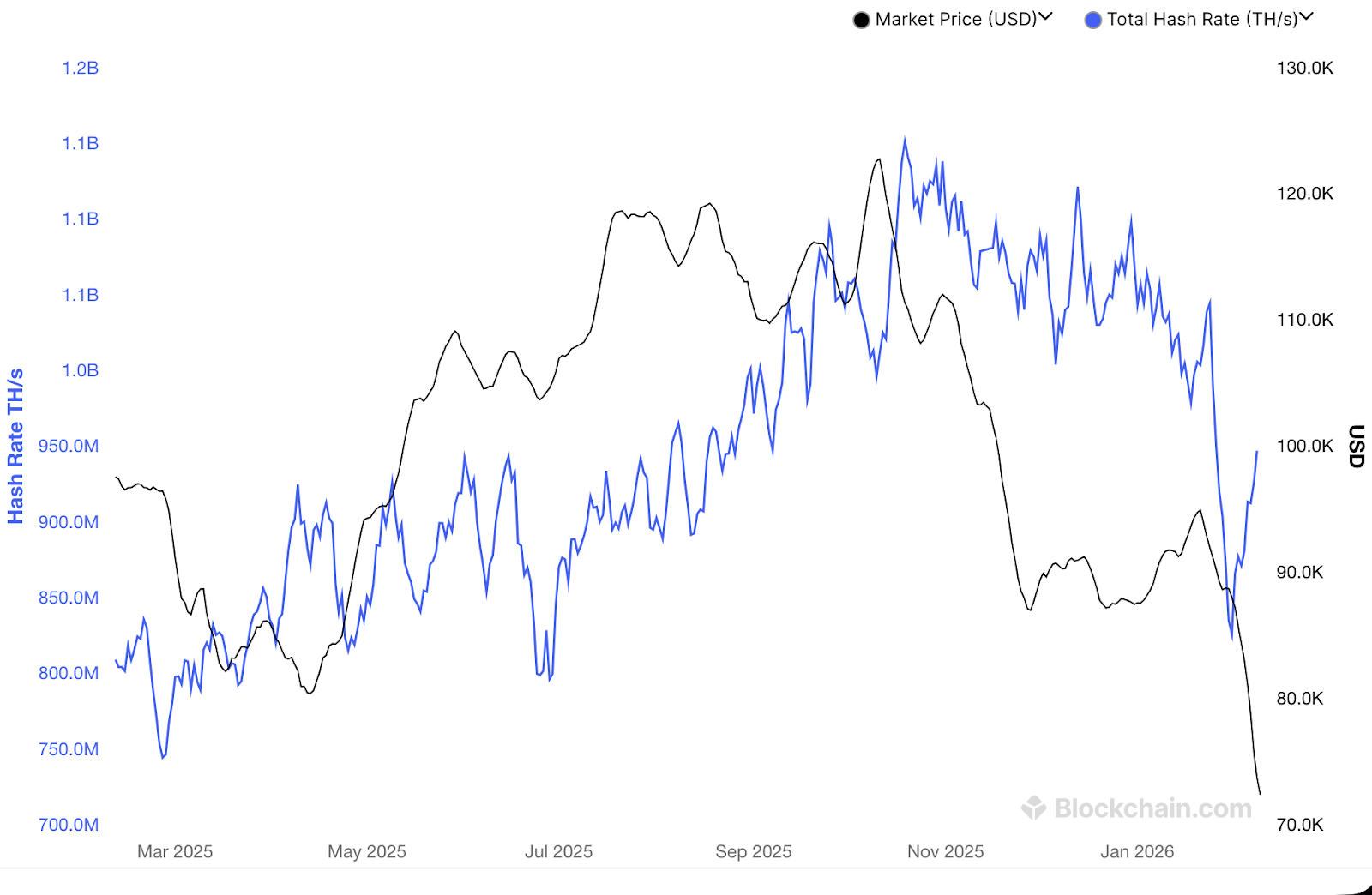 Figure 1: Bitcoin Price and Network Hashrate Adjust Over Different Timeframes (Blockchain.com)
The chart shows that market price moves, while network hashrate adjusts more gradually. This illustrates the difference between price-based exposure and operating exposure, where production responds through infrastructure and execution rather than immediate market repricing.
How Production Changes the Investment Frame
Producing Bitcoin introduces duration and structure. Output accumulates over time through sustained operation. Energy contracts, maintenance planning, and hardware lifecycle management define performance boundaries.
This allows production to be evaluated using operating models. Cost curves, recovery timelines, and variance drivers become measurable. Performance improves through execution discipline rather than market positioning.
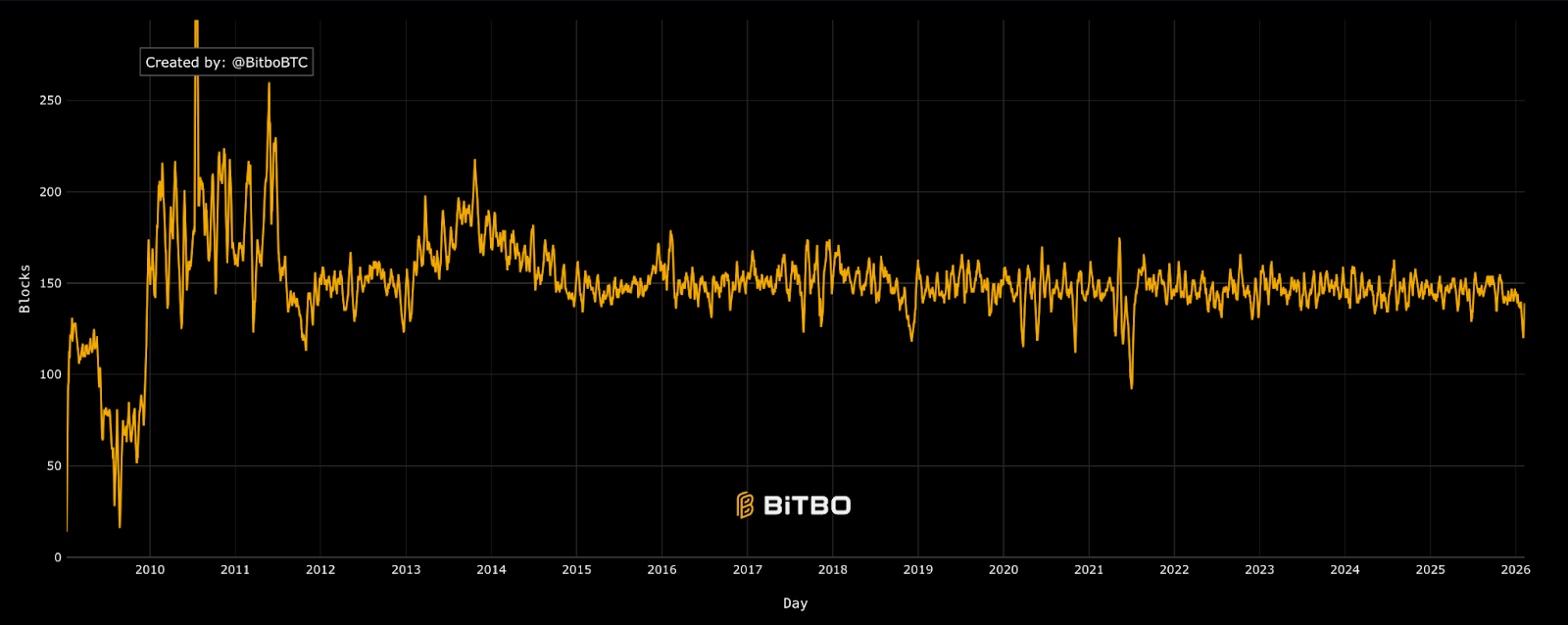 Figure2: Bitcoin Block Production Remains Stable Across Market Cycles (BiTBO)
The chart shows that Bitcoin block production remains consistent over time despite periods of significant price repricing. While market conditions change, protocol-level output follows a fixed schedule governed by difficulty adjustment. This illustrates why production-based exposure is assessed through operating continuity and execution discipline rather than market positioning.
How Cycles Are Experienced Differently
Market cycles affect ownership immediately through repricing. Production experiences cycles through margins, cost pressure, and efficiency.
Well-structured production continues to operate across all phases. Energy flows, systems remain active, and Bitcoin continues to be produced. Exposure is shaped by operational quality rather than short-term market conditions.
Where Infrastructure Determines Outcomes
Producing Bitcoin at scale requires alignment of infrastructure. Energy must be secured through defined pricing and delivery terms. Operations must be engineered for stable uptime and controlled thermal conditions. Reporting must track performance drivers consistently.
When these elements are in place, production behaves as a system. Output remains predictable within known parameters. Performance improves through discipline rather than narrative.
How Allocators Use Both Exposures
Owning Bitcoin answers one question: exposure to price.
Producing Bitcoin answers another: participation in the network’s economic engine.
Allocators who recognise this distinction position capital more precisely. Ownership serves liquidity and directional exposure. Production serves structured participation and long-duration output. Each is evaluated on its own terms.
Conclusion
Owning Bitcoin and producing Bitcoin are not interchangeable exposures. They represent different roles within the same system.
Understanding this difference allows investors to assess Bitcoin exposure with greater clarity, align objectives with structure, and evaluate performance through variables that produce results over time.
This distinction between ownership and production connects with our recent analysis on:
- Why Mining Returns Fail at Scale and How Infrastructure Preserves Them
- Why Energy Contracts Matter More Than Hashrate in Bitcoin Mining